Key takeaways
- check_circle TB is a bacterial infection that primarily attacks the lungs — but it is completely curable with the right medicines taken consistently.
- check_circle In Karimnagar, coal mine workers with dust-damaged lungs are at significantly higher risk of contracting and developing severe TB.
- check_circle TB spreads through the air — crowded worker housing near Singareni makes transmission easier.
- check_circle The biggest danger is not completing the full course — this creates drug-resistant TB, far harder and longer to treat.
- check_circle TB carries unnecessary stigma. It is an infection — not a result of weakness, poverty, or bad character.
- check_circle A cough over 3 weeks with fever and weight loss — get tested today. TB is curable; delay is not.
What is tuberculosis?
Tuberculosis is caused by the bacterium Mycobacterium tuberculosis. It most commonly attacks the lungs (pulmonary TB) but can also affect the spine, kidneys, brain, and lymph nodes (extrapulmonary TB). India carries the highest TB burden of any country on earth.
The bacteria are remarkably resilient. They can lie dormant for months or years causing no symptoms — latent TB — held in check by your immune system. If immunity weakens (illness, malnutrition, diabetes, dust-damaged lungs), the bacteria reactivate into active TB, when symptoms appear and the disease becomes contagious. This is why workers with lungs already scarred by coal dust are at such high risk.
Who is at risk?
- check_circle Coal mine workers — silicosis scars the lungs and weakens local immunity; silicosis with TB (silicotuberculosis) is especially aggressive.
- check_circle People living in crowded conditions — dormitories and colonies near the mines make airborne spread easier.
- check_circle People with diabetes — diabetes substantially weakens immunity; the TB-diabetes combination is a growing crisis.
- check_circle People with HIV; malnourished individuals; close contacts of TB patients.
- check_circle Bidi and cigarette smokers; people on immunosuppressive medicines.
- check_circle Previously treated TB patients — incomplete past treatment raises the risk of drug-resistant TB.
Symptoms to watch for
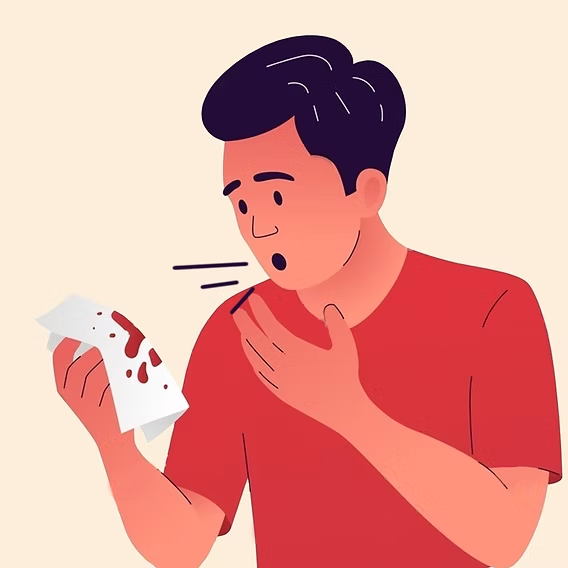
- check_circle A cough lasting more than 3 weeks — often with mucus or blood-tinged sputum
- check_circle Low-grade fever, often worse in the evenings; drenching night sweats
- check_circle Unexplained, often dramatic weight loss; persistent fatigue that rest does not fix
- check_circle Loss of appetite; chest pain when breathing or coughing
- check_circle Depending on spread: swollen neck lymph nodes, back pain with leg weakness (spinal TB), headache and stiff neck (TB meningitis — an emergency)
A cough lasting more than 3 weeks with fever and weight loss is TB until proven otherwise. Do not wait — book a TB evaluation with Dr. Praveen in Karimnagar. Early diagnosis saves lives and protects your family.
How is TB diagnosed?
Diagnosis needs a combination of tests. Sputum microscopy (AFB smear) examines a deep-cough mucus sample under the microscope, with results in about 24 hours — rinse the mouth with water first and bring up deep mucus, not saliva.
CBNAAT/GeneXpert is a molecular test that detects TB genetic material and also checks for rifampicin resistance within about 2 hours — available free at government centres. Sputum culture with drug-sensitivity testing is the most accurate test but takes 2–6 weeks. A chest X-ray shows characteristic shadows and cavities; in mine workers, separating TB from silicosis changes needs an experienced pulmonologist. The Mantoux skin test and IGRA blood test detect exposure or latent infection, and a CT scan helps when the X-ray is unclear.
How is TB treated?
The most important thing to understand: TB treatment works. Virtually every case of drug-sensitive TB can be fully cured. The challenge is not the medicine — it is completing the full course.
Standard treatment under India's DOTS programme is a combination of antibiotics over 6 months — four medicines (isoniazid, rifampicin, pyrazinamide, ethambutol) for the first 2 months, then two for the remaining 4. These medicines are provided free of charge through government health centres. There is no reason for any TB patient in Karimnagar to go without treatment.
Many patients feel better after 2–3 months and stop — one of the most dangerous things a TB patient can do. Stopping early lets partially resistant bacteria multiply, producing multi-drug-resistant TB (MDR-TB) which needs 18–24 months of harsher drugs. Take every dose; complete all 6 months; no exceptions.
Nutrition matters as much as the medicines — the government's Nikshay Poshan Yojana provides ₹500 per month to every registered TB patient during treatment. Close contacts may be offered preventive therapy to stop latent infection becoming active disease.
Living with TB during treatment
- check_circle Continue treatment even if you feel well — feeling better is the medicine working, not a reason to stop.
- check_circle You are contagious in the first few weeks — cover your mouth, ventilate the home, mask around the vulnerable.
- check_circle After 2–3 weeks of proper treatment most patients are no longer contagious and can return to work with clearance.
- check_circle Report side effects — yellow eyes or skin, tingling in hands and feet, vision changes — they can be managed.
- check_circle Avoid alcohol completely; eat, rest, and sleep well; register under Nikshay for free medicines and support.
Common myths — busted
'TB is a disease of the poor and dirty.' False — it spreads through the air; anyone who breathes can contract it, and stigma only stops people getting tested. 'TB can be treated with home remedies.' False — no remedy kills Mycobacterium tuberculosis; it needs specific antibiotics for a full 6 months.
'Once I feel better I can stop the medicines.' False and extremely dangerous — stopping early creates drug-resistant TB. 'Coal mine workers always get TB — it is normal.' False — dust-damaged lungs are more vulnerable, but with screening, treatment, and protection, TB in mine workers is both preventable and curable.
When is it an emergency?
Book an appointment if you have had a cough for more than 3 weeks, unexplained fever, night sweats or weight loss, a household or workplace TB contact, respiratory symptoms as a mine or plant worker, or returning symptoms after past TB treatment.
Go to emergency immediately if you cough up significant blood, have severe difficulty breathing, develop a sudden severe headache, stiff neck, or confusion (possible TB meningitis), or a household TB patient becomes unresponsive.
Dr. Praveen's message
TB is not a disease from another era. It is here, in Karimnagar, in our mining communities and in our homes — and it is taking lives that should not be lost. I have seen workers with both silicosis and TB, families hesitating to test because of stigma, and patients stopping medicines at 2 months only to return with drug-resistant TB.
All of this is preventable. TB is curable — every single case, treated correctly from the start, can be resolved. The medicines are free. What we need is the courage to get tested, the discipline to complete treatment, and the compassion to support rather than shame. This is a battle we can win together.
This article is for educational purposes only and does not replace personalised medical advice. Please consult Dr. Praveen for diagnosis and treatment specific to your condition.
Twelve years of pulmonology practice in Karimnagar. I write these articles for my own patients — plain language, no jargon, honest answers.