Key takeaways
- check_circle Sleep apnea is a condition where breathing repeatedly stops and starts during sleep — sometimes hundreds of times a night — without you knowing.
- check_circle The most common warning sign is loud snoring — but not everyone who snores has sleep apnea, and not everyone with sleep apnea snores loudly.
- check_circle Shift workers at Singareni mines and thermal plants are at particularly high risk, and their daytime fatigue is often mistaken for laziness.
- check_circle Untreated sleep apnea significantly raises the risk of heart attack, stroke, high blood pressure, and diabetes.
- check_circle CPAP and BiPAP machines are highly effective, life-changing treatments — and simpler to use than most people expect.
- check_circle If you snore heavily, wake up tired no matter how long you sleep, or feel sleepy during the day, get a sleep study done.
What is sleep apnea?
The word 'apnea' comes from the Greek for 'without breath'. Sleep apnea is a condition where the upper airway collapses partially or completely during sleep, blocking the flow of air.
When this happens, the brain detects that breathing has stopped and wakes you just enough to restart it. You may gasp, snort, or shift in bed but rarely wake fully. This cycle can repeat 30, 50, even 100 times an hour — leaving sleep fragmented and non-restorative no matter how long you spend in bed.
There are three types: obstructive sleep apnea (OSA, the most common — throat muscles relax and the airway collapses), central sleep apnea (the brain fails to signal the breathing muscles), and complex or mixed apnea (a combination). In Karimnagar, OSA is what Dr. Praveen most commonly sees, and it is dramatically underdiagnosed.
Workers at the Singareni collieries and nearby thermal plants frequently rotate shifts. Shift work alone disrupts the natural sleep-wake cycle; add undiagnosed sleep apnea and the combination is devastating — these workers operate heavy machinery and drive while chronically sleep-deprived, and the fatigue is wrongly dismissed as 'he works hard'.
Who is at risk?
- check_circle Overweight or obese individuals — excess weight around the neck narrows the airway; this is the single strongest risk factor.
- check_circle Men — 2–3 times more likely than pre-menopausal women; risk in women rises after menopause.
- check_circle Shift workers — irregular schedules, chronic sleep debt, and disrupted circadian rhythm increase risk and severity.
- check_circle People with a thick neck — above 40 cm in women, 43 cm in men.
- check_circle People with a narrow jaw or receding chin, or habitual snorers.
- check_circle Heavy alcohol users and smokers — both relax and inflame the upper airway.
- check_circle People with hypertension, diabetes, or heart disease — both a cause and a consequence of untreated apnea.
- check_circle People with a family history of sleep apnea.
Symptoms to watch for
Sleep apnea is sneaky — the events happen while you are asleep, so it is often a bed partner or family member who first notices the warning signs.
- check_circle Loud, persistent snoring; witnessed pauses in breathing followed by a gasp or snort
- check_circle Waking with a choking or gasping sensation; restless, frequently changing position
- check_circle Waking with a dry mouth or sore throat; morning headaches
- check_circle Excessive daytime sleepiness — falling asleep at meals, in conversations, while travelling
- check_circle Feeling completely unrefreshed after a full night's sleep; poor concentration and memory ('brain fog')
- check_circle Irritability and mood changes; reduced libido; waking frequently to urinate
In children, watch for mouth breathing during sleep, bedwetting despite being old enough to stay dry, behavioural problems and poor concentration at school, and unusual sleep positions. If your family says you snore like a machine and you still wake up tired, please do not ignore it — book a sleep evaluation with Dr. Praveen in Karimnagar.
How is sleep apnea diagnosed?
Polysomnography is the gold-standard overnight sleep study — it monitors brain activity, heart rhythm, oxygen levels, airflow, chest movement, and limb movements. It produces an AHI score (Apnea-Hypopnea Index — breathing interruptions per hour): under 5 is normal, 5–14 mild, 15–30 moderate, above 30 severe. A portable home sleep test is sufficient for diagnosing most cases of OSA.
Overnight pulse oximetry is a simpler screening tool that records repeated oxygen drops. The Epworth Sleepiness Scale questionnaire measures daytime sleepiness (a score above 10 warrants investigation). Dr. Praveen also examines the throat, palate, tongue, and neck circumference for structural clues before formal testing.
How is sleep apnea treated?
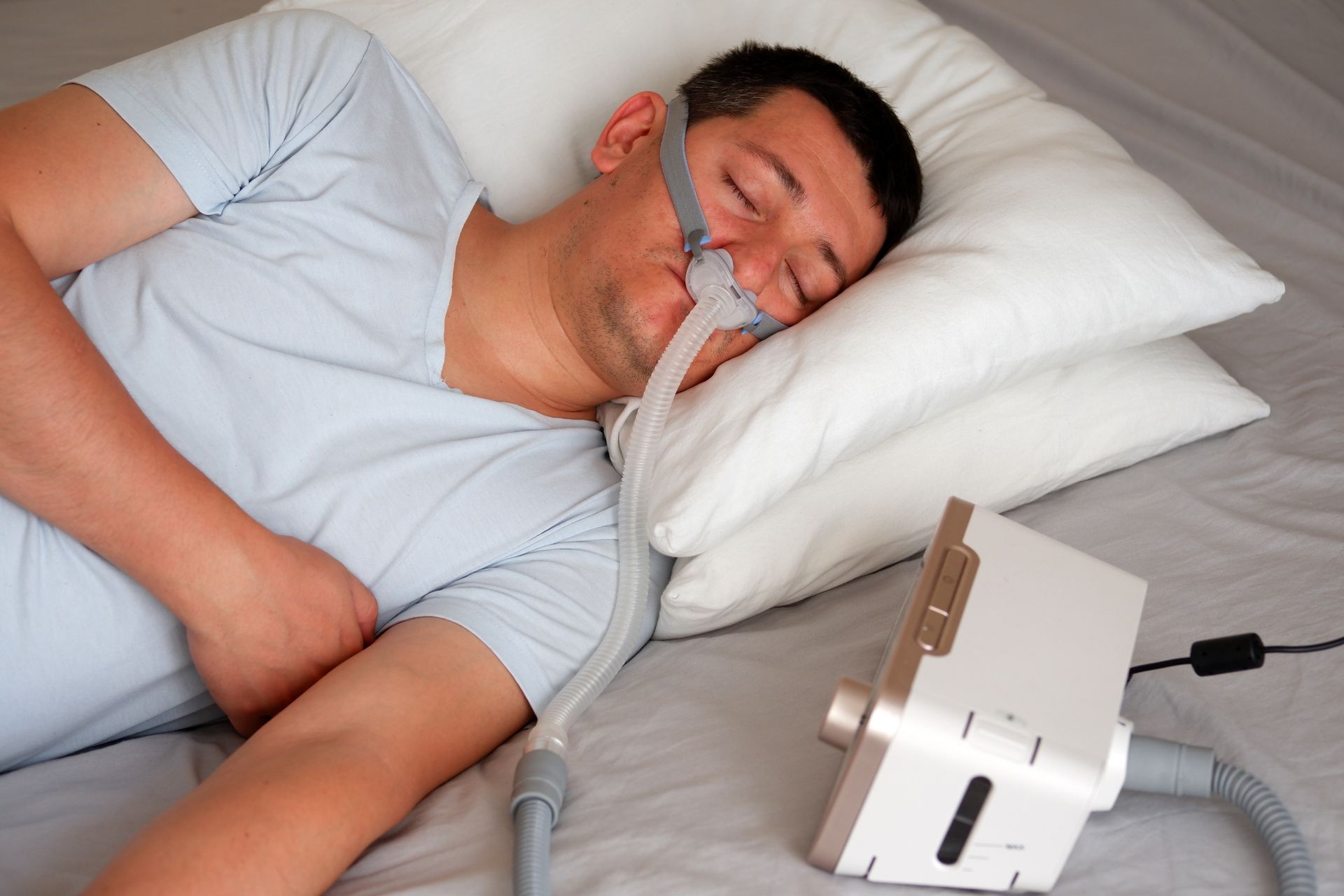
CPAP (Continuous Positive Airway Pressure) is the most effective treatment for moderate to severe OSA. A quiet machine delivers a gentle stream of pressurised air through a mask, splinting the airway open so it cannot collapse. Masks come in several styles, it typically takes 1–2 weeks to adapt, and modern machines record usage data so settings can be optimised. The results — daytime alertness, lower blood pressure, better mood and memory, reduced heart risk — are often described as life-changing.
BiPAP delivers two pressure levels (higher on inhalation, lower on exhalation), making breathing feel more natural for patients who find exhaling against CPAP difficult or who have COPD or complex disorders. Auto-CPAP (APAP) automatically adjusts pressure through the night.
Lifestyle measures are essential alongside device therapy: even a 10% weight reduction can cut AHI severity by about 30%; positional therapy (side sleeping) helps when apnea is worse on the back; quitting smoking and alcohol measurably improves severity; and good sleep hygiene matters especially for shift workers. Custom oral appliances help selected mild-to-moderate cases, and surgery is considered for specific structural problems.
Living with sleep apnea
- check_circle Use your CPAP every night — including naps. Consistency is the key to benefit.
- check_circle Clean the mask and tubing at least weekly to keep a good seal and avoid skin irritation.
- check_circle Travel with your CPAP — modern machines are compact and allowed as airline carry-on.
- check_circle Inform your employer if you are a shift worker or operate machinery — safety matters.
- check_circle Check blood pressure and blood sugar regularly; both are closely linked to apnea.
- check_circle Have an annual follow-up with Dr. Praveen to review CPAP data and adjust settings.
Common myths — busted
'Snoring is harmless — everyone snores.' False. Loud, habitual snoring with witnessed pauses is a major red flag. 'Sleep apnea only affects overweight people.' False — thin people with a small jaw or enlarged tonsils get it too.
'CPAP is uncomfortable — I will never get used to it.' Usually wrong: most patients who persist for two weeks adapt well. 'I feel fine during the day, so my sleep must be okay.' False — many patients adapt to chronic deprivation while their heart and brain are still being damaged nightly. A bed partner's concern about your breathing is a medical symptom, not an overreaction.
When is it an emergency?
Book an appointment if you snore loudly and persistently, your bed partner has seen you stop breathing, you wake tired regardless of sleep length, you have unexplained morning headaches, you fall asleep easily during the day, you are a fatigued shift worker, or you have hypertension, diabetes, or heart disease.
Seek emergency help if someone with known severe sleep apnea becomes unresponsive or very difficult to wake, develops chest pain, severe breathlessness, or palpitations during sleep, or a child turns blue around the lips during sleep.
Dr. Praveen's message
Sleep apnea is one of the most invisible conditions I treat — because it happens while people are unconscious, and because we have been culturally conditioned to treat snoring as something to laugh about rather than investigate.
I think about the mine workers doing night shifts — men who have not truly rested in years, whose families think they are lazy, who themselves believe exhaustion is just the price of hard work. A CPAP machine is not a sign of weakness; it is a tool, like glasses for the eyes. One sleep study and one honest conversation could change the quality of every night for the rest of your life.
This article is for educational purposes only and does not replace personalised medical advice. Please consult Dr. Praveen for diagnosis and treatment specific to your condition.
Twelve years of pulmonology practice in Karimnagar. I write these articles for my own patients — plain language, no jargon, honest answers.